
2024.07.29
The project is a collaboration of researchers from the four institutions, University of Copenhagen (UCPH), Statens Serum Institut (SSI), Technical University of Denmark (DTU), and St. Jude Children's Research Hospital (St. Jude) in Memphis, USA. All are experts in various aspects of influenza virus infections in humans and animals.
Influenza A virus is a virus that kills many people every year. There is a constant exchange of influenza virus between humans and pigs, leading to the formation of new viruses with the potential to develop into a new influenza pandemic. The flu pandemic in 2009 was thus caused by a virus from pigs. Denmark produces more than 30 million pigs annually, and thousands of people are in daily contact with pigs. This makes Denmark a hot spot for the development of new influenza viruses and provides a perfect framework for the study of the exchange of influenza viruses.
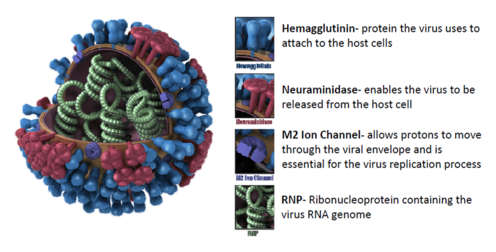
Influenza A virus (IAV) is an important pathogen in humans and animals and has zoonotic potential. Historically, devastating influenza pandemics have killed millions of people. Infections of humans with avian influenza A virus are relatively rare but has a case-fatality rate above 50%. A major barrier to human infection by the avian virus is differences in receptor binding preference, but a comprehensive list of other factors have been published. Furthermore, different host factors including age, gender, and expression of IFN-induced genes have been shown to influence the susceptibility.
Pigs are regarded as a melting pot for generation of new IAV variants with changed virulence and host range. Nevertheless, there is a lack of knowledge of viral genetic markers of both virulence and host range barriers of swine influenza A viruses (swIAV), even though the fact that the most recent pandemic in 2009 was caused by an IAV of swine origin. Furthermore, there is substantial documentation for frequent transmission of swIAV to humans and vice versa. Since the receptor binding preference of human and swIAV are similar, the mechanism behind zoonotic potential and transmission must depend on other viral and/or host factors.
Half of the diagnostic submissions from Danish swine are positive for IAV. The majority of the isolates are swine specific swIAV, whereas viruses derived from the recent pandemic in humans (H1N1pdm09) constitute 25% of the positive samples. The last 10% of the viruses represent variants including re-assortments that have acquired human seasonal influenza virus genes. In total, different variants are presently circulating in Danish swine. The frequent occurrence of genes originating from seasonal human influenza strains in Danish pigs indicates an ongoing spillover of influenza virus from humans and show that these viruses mix with enzootic swIAV creating new reassortant viruses with potential zoonotic capabilities. Denmark produces more than 30 million pigs yearly and thousands of people are in daily close contact with them, making Denmark a potential hotspot for creation of new influenza viruses and provides a perfect setting for the study of the exchange of viruses.
Thus, more knowledge about the molecular determinants of both virus and host, that restrict the host range of new influenza A virus strains, is urgently needed
The ambition of the FluZooMark project is to identify reliable molecular markers for the prediction of the zoonotic potential of new Influenza A viruses (IAVs) in swine. FluZooMark will combine leading researchers with unique access to influenza virus isolates, laboratory techniques and data.
The mechanism behind transmission of influenza A virus from animals to humans is of obvious interest and a number of studies has focused on viral and host markers for transmissibility of avian influenza to humans or has focused on identification of genetic markers of transmission of influenza viruses from swine to humans. In contrast, studies on host factor determinants in human infection with swine influenza virus are scarce. Furthermore, most studies have focused on examination of the significance of either viral or host factors restricted to humans or animals. The activities in the FluZooMark project are different and groundbreaking in the combination of expertise in medical and veterinary sciences and implement a unique cross-disciplinary approach by integrating research in virology and immunology in animals and humans.
The expected outcomes include the establishment of innovative, cheap and fast tools to improve our capability to predict the zoonotic potential of emerging IAVs for the prevention of future influenza pandemics and design of improved vaccines. These tools are essential to avoid public fear caused by false alarms, while still allowing authorities to elicit an earlier, more effective and appropriate response when real threats emerge. Furthermore, FluZooMark will train highly skilled young scientists that will become the next generation of outstanding researchers in influenza virus biology.
The FluZooMark project is a consortium of the four member institutions listed below
The planned scientific approach of the FluZooMark project is divided into 6 work packages (WP1-6). A brief description of each is given here, and their internal relationships are visualized in the figure.

The FluZooMark project is a consortium of the four member institutions described in the Who we are-box. Combined, the project has an extensive network of established relations to relevant organization and agencies. These are listed below.
CDC, or Centers for Disease Control and Prevention, is the leading national public health institute of the United States. Its main goal is to protect public health and safety through the control and prevention of disease, injury, and disability in the US and internationally.
The Danish Pig Industry is responsible for an annual production of 30 million pigs. Pigs are regarded a melting pot for generation of new influenza variants, making Denmark a potential hotspot for influenza outbreaks.
DVFA, or the Danish Veterinary and Food Administration, is part of the Ministry of Environment and Food and is responsible for food safety and health from farm to fork.
ECDC, or the European Centre for Disease Prevention and Control, is an independent agency of the European Union (EU) whose mission is to strengthen Europe's defenses against infectious diseases.
NIH, or the National Institutes of Health, is the primary agency of the United States government responsible for biomedical and public health research. The NIH comprises 27 separate institutes and centers of different biomedical disciplines and works to prevent disease and improve health.
OFFLU is an animal influenza network with the vision to provide early recognition and characterization of emerging influenza viruses in animal populations, and effective management of known infections.
OIE is an intergovernmental organization responsible for promoting animal health worldwide. It has 182 member states and is recognized as a reference organization by the World Trade Organization (WTO).
SEGES is the knowledge center for the Danish Agriculture and Food Council. SEGES represents an important bridge between research and practical farming.
SST is the Danish Health Authority and is striving for the highest level of public health. It provides guidelines and advice to the general public and to the Danish government.
WHO, or The World Health Organization, is a specialized agency of the United Nations with its main objective to ensuring the attainment by all peoples of the highest possible level of health. It has 194 member states.
September 2024, Research Article
Charlotte Kristensen , Henrik E. Jensen, Ramona Trebbien, Richard J. Webby, and Lars E. Larsen
February 2024, Research Article
Charlotte Kristensen, Lars E. Larsen, Ramona Trebbien, Henrik E. Jensen
December 2023, Research Article
Charlotte Kristensen, Henrik E. Jensen, Ramona Trebbien, Pia Ryt-Hansen & Lars E. Larsen
December 2023, Research Article
Charlotte Kristensen, Helena A. Laybourn, Jeri-Carol Crumpton, Karen Martiny, Ashley Webb, Pia Ryt-Hansen, Ramona Trebbien, Henrik E. Jensen, Jakob N. Nissen, Kerstin Skovgaard, Richard J. Webby, Lars E. Larsen
Immunobiology. 2022, May - Research Article
Sofie M.R. Starbæk, Malene Rask Andersen, Louise Brogaard, Anna Spinelli, Victoria Rapson, Helena Aagaard Glud, Lars E. Larsen, Peter M.H. Heegaard, Hans Nauwynck, Kerstin Skovgaard
Emerging Infectious Disease. 2021, Nov 09 - Research Letter
Jakob N. Nissen, Sophie J. George, Charlotte K. Hjulsager, Jesper S. Krog, Xiaohui C. Nielsen, Tina V. Madsen, Klara M. Andersen, Tyra G. Krause, Lasse S. Vestergaard, Lars E. Larsen, and Ramona Trebbien
APMIS. 2021, Sep 29 - Review Article
Elife. 2021, Jul 27 - Research Article

The FluZooMark has received a six year funding from the Novo Nordic Foundation
Grant number: NNF19OC0056326
Period: 2020-2026
Lars Erik Larsen
Professor
Department of Veterinary and Animal Sciences
University of Copenhagen
Phone: +45 35 33 23 29
Mail: lael@sund.ku.dk